
Hillingdon left a woman's care underfunded for two years, building an £11,500 debt. It is one of seven Ombudsman complaints upheld against the council since June.
Hillingdon Council knew for more than two years that a woman’s care was underfunded and did nothing. Her family cut her care from 61 hours a week to about 48 because they could not pay the difference. They ran up a debt of about £11,500.
The council only acted after the Local Government and Social Care Ombudsman started asking questions. (Ombudsman decision 25 009 471)
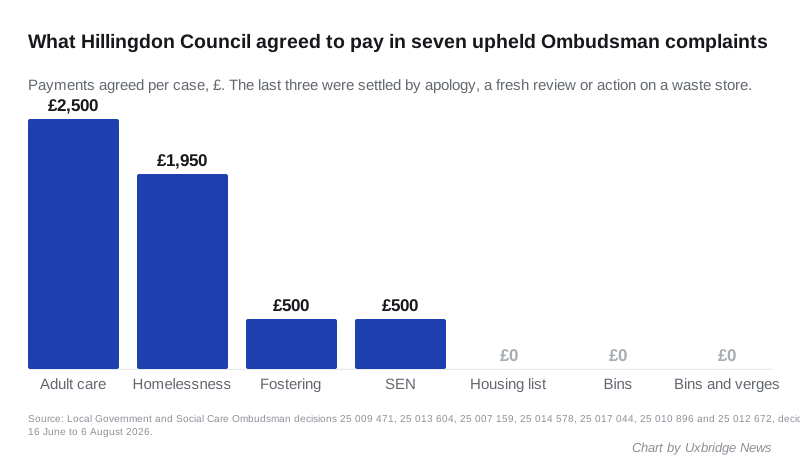
It is one of seven complaints against the council that the Ombudsman upheld in decisions dated between 16 June and 6 August 2026. We read all seven. Between them the council has agreed to pay £5,450, and to apologise in five of the cases. (Ombudsman decisions for the London Borough of Hillingdon)
The Ombudsman does not name the people who complain. We have used the letters its decisions use.
The care package nobody updated
Miss Y lives with her family. The council meets her care needs through a direct payment for 61 hours of support a week, with a provider that has worked with her for years.
In April 2024 the provider told the council its hourly rate was going up by about £5. The council kept paying the old rate. The Ombudsman’s decision sets out what followed:
- December 2024: the council reviewed her support plan, confirmed she needed 61 hours, and kept the old rate.
- April 2025: the provider told the council the family faced a shortfall of about £1,500 a month.
- July 2025: a review recorded that the family were buying 193 hours every four weeks against an assessed need of 244.
- August 2025: the council’s complaint reply told the family they could pay the difference themselves.
- December 2025: another review, and still no change to the rate.
The investigator counted five significant chances to fix it and found the council “did not act for over two years despite several opportunities”. Miss Y was left “at risk of harm”. (Decision 25 009 471)
The council has now agreed to:
- raise the direct payment to the provider’s rate and wipe the debt from her account
- pay Miss Y £500 and her sister, Miss X, £2,000
- apologise to both
- show within three months that the relevant council committee has overseen its promised fixes
Those fixes are a standard agency rate for all direct care packages, reviewed every year, and clearer rules for escalating a price rise that puts care at risk. If your own direct payment no longer covers your provider’s rate, that is the change to ask about.
A pregnant mother in unsafe housing for seven months
Miss D was evicted by bailiffs on 6 March 2025. After one night in a hotel, the council placed her and her children in interim accommodation outside the area where her work, family and child’s school were. She had told the council she could not use public transport.
Within days she reported exposed wiring, poor hygiene and unsafe furniture. The council says repairs were finished by 27 March. She told the council that month that she was pregnant. (Ombudsman decision 25 013 604)
The council later accepted she had been in unsuitable accommodation from 6 March until she moved into a private rental on 14 October 2025. The Ombudsman found it:
- put her on a transfer list in May without assessing her needs, and did not tell her until September
- sent her main housing duty decision more than a month late
- ignored her three complaints that housing officers were not helping her find a private rental
Miss D says one officer told her he had forgotten about her. The council’s own complaint reply called it “unacceptable” that a second officer had forgotten about her case. The rent deposit for her new home was then held up because the council had the letting agent’s bank details wrong.
The council will pay her £1,750 for the time in unsuitable housing, £200 for her time and trouble, and apologise.
Almost two years to say no to a foster carer
Miss X, a single mother of three, asked about fostering for Hillingdon in May 2023. The council visited her home in June 2023 and invited her to apply. It rejected her in March 2025, citing the layout of her home, mould and the state of her garden. (Ombudsman decision 25 007 159)
National standards say an assessment should reach the fostering panel within eight months. The council’s own website aims for about six. This one took 20 months to produce a report and another four to reach the panel.
The council’s records show no action on the case between December 2023 and February 2025. It blamed “structural changes within the fostering team, staff transitions and increased caseloads”.
The Ombudsman found the council knew about the layout of her home from its very first visit and never raised it. Miss X has since been accepted by an independent fostering agency. The council will apologise and pay her £500.
The other four
- A disabled student’s exam kit (decision 25 014 578). B, who has significant physical disabilities, was taught at home from February 2025 after his college said it could not meet his needs. The laptop in his education plan arrived late, without the software he needed, and some exams had to be rescheduled. The council said it had not known about the problems. The Ombudsman said the legal duty was the council’s all the same. It will pay £500 and apologise. (Decision)
- Repeated missed bins at a block of flats (25 010 896). Mrs K’s bins were missed several times in 2025. The council collected them late each time, but only raised the real problem, that the block needs bulk bins, once she had gone to the Ombudsman. It is now working with the landlord on the bin store. (Decision)
- Overgrown vegetation (25 012 672). Mr X reported an obstruction near his home in December 2024. The council took four months to act. It will apologise. His other complaints, about two missed collections and fly-tipping, were not upheld. (Decision)
- A housing register refusal (25 017 044). Mr X asked to join the register because his medical needs require a second bathroom. The council’s review talked about his bedrooms instead. It has agreed to decide again, properly this time, and to backdate any change. (Decision)
How Hillingdon compares
The Ombudsman also publishes a yearly scorecard for each council. In the year to 31 March 2026 it dealt with 171 complaints about Hillingdon, investigated 25 and upheld 20. (Hillingdon complaint statistics, Ombudsman)
| Measure, 2025/26 | Hillingdon | Average for London boroughs |
|---|---|---|
| Investigated complaints upheld | 80% | 88% |
| Upheld per 100,000 residents | 6.1 | 10.2 |
| Already put right by the council before it reached the Ombudsman | 5% | 14% |
| Recommendations completed on time | 50% | 65% |
So, for its size, Hillingdon has fewer complaints upheld against it than the average London borough. When one does, though, the council has rarely fixed it first. It had done so in only one of the 20 upheld cases. It also finished only half of what the Ombudsman told it to do on time, against about two-thirds elsewhere. It did complete all 20 in the end.
What it means for you
- Complain to the council first. The Ombudsman will usually only look at a case once you have been through the council’s own complaints process. You can complain to Hillingdon online.
- Then go to the Ombudsman, and do not wait. If the council’s final reply does not put things right, you can take it to the Ombudsman for free. It cannot normally look at a complaint if more than 12 months have passed since you first knew about the problem.
- Get it in writing. Several of these cases turned on what the council had or had not recorded. Miss D says she sent a GP letter three times; the council had no record of it, and the Ombudsman could not find fault on that point.
- If you receive a direct payment, check it still covers your provider’s current hourly rate. If it does not, ask for a review in writing and quote the shortfall.
The council’s wider performance is examined in public by its select committees. Our coverage of the West Drayton tip closure motion sets out how petitions and motions reach them.
Have your say