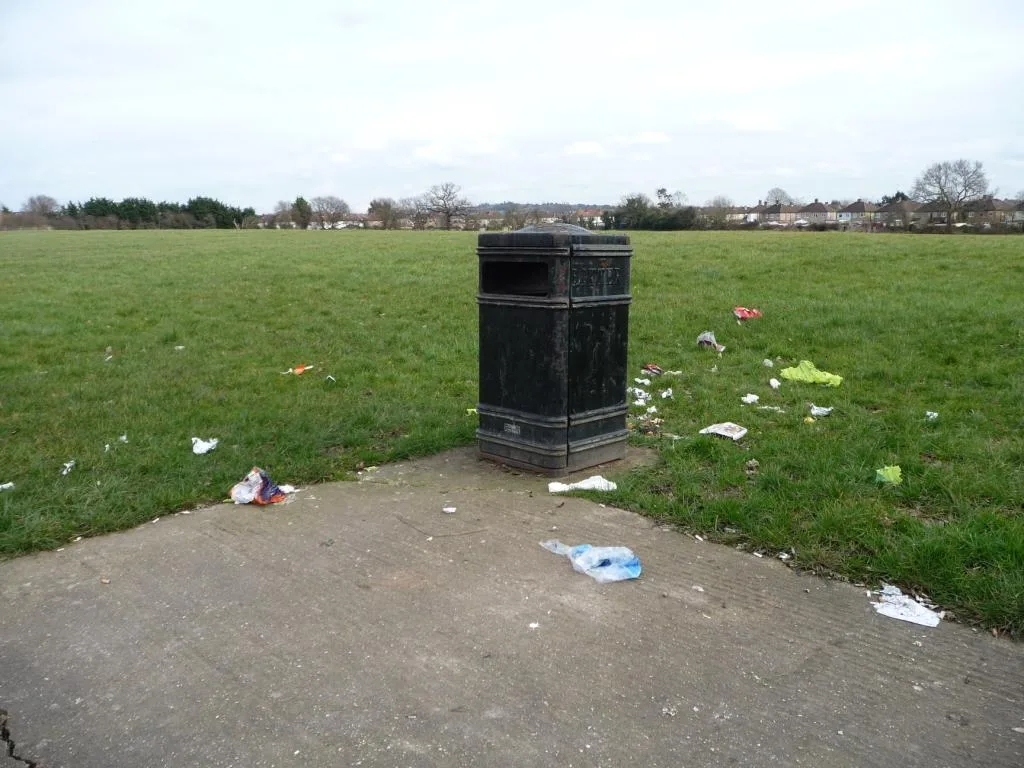

All 700 Hillingdon dog waste bins are to go, saving £100,000 a year. Bag it and use any litter bin or your black sack at home. Removals from late January.
Updated 1 November: no scrutiny call-in had been published by the 29 October deadline, so the removal timetable below now runs from that date.
Every standalone dog waste bin in Hillingdon is to be taken away. That is about 700 bins across the borough. Dog owners will be told to put bagged waste in any ordinary litter bin, or take it home and put it in their household rubbish.
Councillor Wayne Bridges, Cabinet Member for Residents’ Services, approved the plan on 22 October. It was a decision for him alone, not for the full Cabinet or a vote of councillors. The council’s officer report says no formal public consultation was carried out and none is planned. (Hillingdon Council, Cabinet Member decisions, reference 2026/1819; full report and decision notice)
The money
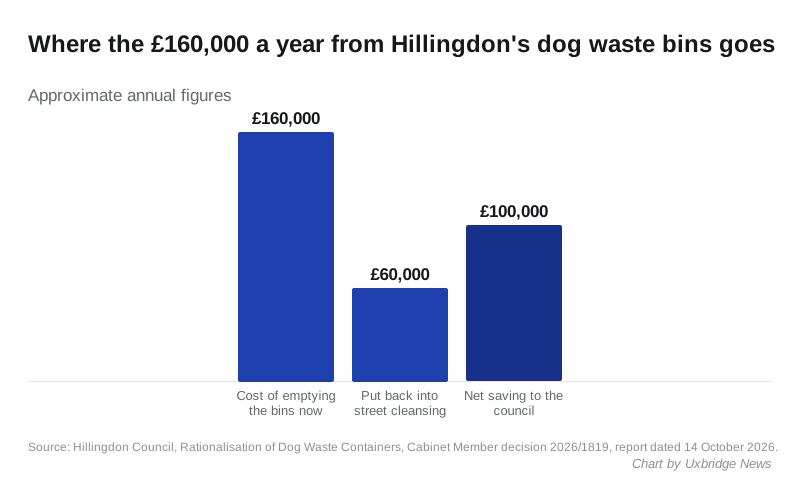
Emptying the dog bins costs about £160,000 a year. The work sits inside a specialist cleaning contract with Charman Environmental Services Ltd, which also covers public toilet cleaning and clinical waste. Ending the dog bin part of that contract produces the saving.
The council will put £60,000 a year of it back into street cleansing, to empty litter bins more often where they fill up faster. That leaves a net saving of about £100,000 a year.
The bins collect about 14.5 tonnes of dog waste a month, around 174 tonnes a year. That will now go in with litter and household rubbish. The report says the council’s existing litter bins are “capable of accommodating this change”, and that the cost of disposing of the extra waste will be absorbed into the existing budget.
What the council looked at
Officers set out three options:
- keep all 700 bins as they are
- remove only the bins that sit close to a litter bin, and keep some in key spots
- remove every standalone dog waste bin
They chose the third. Keeping some bins was rejected because the council would still need a separate collection service to empty them. The report calls full removal “the most effective and efficient option available to the Council”.
It says the network grew “incrementally” over many years, in response to local requests, and that “many” dog bins sit near litter bins. It does not publish a list or map of the 700 bins, or say how many have no litter bin nearby. Its lists of appendices and background papers both read “NIL”.
The council has no legal duty to provide dog waste bins, the report says. Its public spaces protection order (PSPO) already makes it an offence not to clear up after a dog in a public place.
The risks the council itself lists
The report names “an increase in dog fouling” as one of the main risks. It also lists overflowing litter bins in parks and on popular dog walking routes, and “negative public perception”.
Its answers are:
- stickers reading “I can take dog waste too” on selected litter bins in parks, open spaces and dog walking spots
- signs, social media and briefings for ward councillors
- continued enforcement against owners who do not clear up
- emptying litter bins more often at hotspots, paid for from the £60,000
Residents’ association objects
The Ruislip Residents’ Association says the plan should have gone to the public first. It has published photographs of a dog bin in Ruislip Manor full and spilling over with no litter bin nearby, and another in Ruislip Woods National Nature Reserve with no litter bin close by.
The association argues the bins should be sorted out one by one rather than all removed. It says reports of overflowing dog bins through the council’s Love Clean Streets app are often closed with a reply that the bin will be emptied within five days anyway. It has asked residents to contact their ward councillors and members of the Residents’ Services Select Committee.
When the bins go
The decision notice gave select committee members until 5pm on 29 October to call the decision in for a second look. By 1 November no call-in had been published. The committee’s meeting record lists no extra meeting, only its regular one on 24 November, and the council’s November meetings calendar shows no call-in hearing either.
If it goes ahead, the report’s timetable runs from the end of the call-in period:
| When | What happens |
|---|---|
| Week 1 | Contractor told the dog bin service is ending |
| Weeks 1 to 11 | Council publicity campaign |
| Weeks 2 to 10 | “I can take dog waste too” stickers go on litter bins |
| From week 12 | Dog waste bins removed in phases |
Counted from 29 October, week 12 starts around 21 January 2027.
What it means for you
- Until the bins go, nothing changes. Keep using the dog bins on your walk.
- After that, any council litter bin will take bagged dog waste. Look for the stickers on bins in parks.
- Or take it home. Bagged dog waste can go in the black sacks you put out for general rubbish. Collection days are on our bin collection days page.
- Leaving it is still an offence under the council’s PSPO, bin or no bin.
- Report an overflowing bin or dog fouling through the council’s Love Clean Streets service.
- If a dog bin on your route is the only bin nearby, tell your ward councillor. The council says it will watch for hotspots and adjust litter bin emptying where needed.
We will update this page if the decision is called in, and when the council publishes its own guidance for dog owners.
Have your say